The Unsung Heroes Writing Every Subtitle You've Ever Skipped
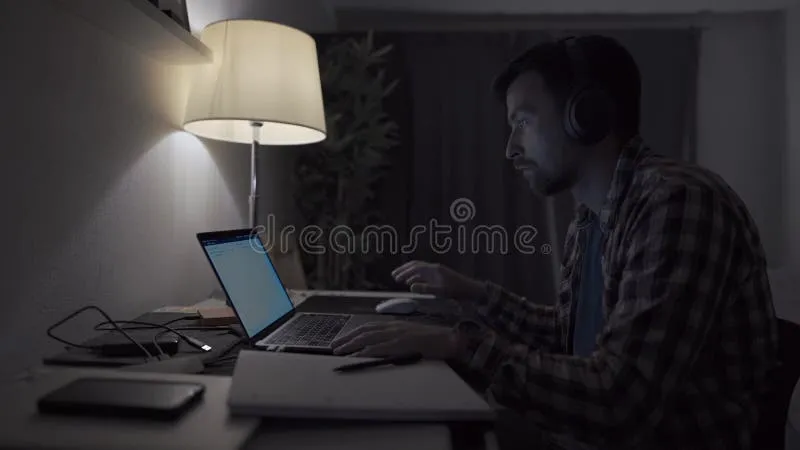
Photo: person typing subtitles on laptop at night with headphones, via thumbs.dreamstime.com
Here's a fun party trick for your next watch party: pause your Chinese drama mid-episode and ask who made the subtitles. Not the streaming service. Not the studio. The actual human being who decided that a rapid-fire joke about a provincial accent needed a translator's note to land in English.
Odds are, the honest answer is: some volunteer, somewhere, who got paid nothing and slept even less.
The 24-Hour Miracle You Never Noticed
A big Chinese drama drops a new episode at 8 p.m. Beijing time. By the time you're eating breakfast in Ohio, there's a subtitled version sitting in a fan community somewhere, timed, typeset, and quality-checked. That's not a machine. That's a pipeline — translators, timers, editors, and typesetters passing the episode down the line like an assembly crew that has never met in person and never will.
Fansubbing has been around as long as fans have wanted media their countries wouldn't give them. The anime community built this culture decades ago. The Chinese drama and variety show scene inherited the playbook and, honestly, ran with it at a pace that would make a corporate localization department sweat.
Why so fast? Because passion is a hell of a deadline. A fan who has followed an actor through three dramas does not want to wait three weeks for a license to trickle over. They want the episode, and they want it now, and apparently a few hundred other people feel the same way.
So Is This... Legal?
Let's not kid ourselves: it lives in a gray zone with the lights off.
Technically, distributing translated episodes without permission is copyright infringement, full stop. The reason it persists is a mix of tolerance and neglect. Rights holders often quietly benefit — fan subs build the international audience that eventually justifies licensing a show in the first place. Plenty of shows got their US fanbase because a sub team took a chance on them.
That said, the community has its own etiquette. Most teams pull their work the moment an official license appears. Some won't touch a show that's already picked up. It's an honor system, and mostly it works — which is more than you can say for some corporate workflows.
The gray zone is real, and I'm not going to pretend otherwise. But it's worth separating the question of legality from the question of value. Both can be true: unauthorized, and genuinely load-bearing for the entire overseas market.
When the Official Subs Lose to the Volunteers
Here's the spicy part. Sometimes a show lands on a major streamer with official English subs, and the fansubs are just... better.
Why? Because a fan translator with unlimited time and deep fandom knowledge will fight for a joke. A contracted localization team working against a batch deadline might play it safe. Puns get flattened. Wordplay gets footnoted into oblivion or dropped entirely. Historical and cultural references — the stuff that makes a costume drama sing — get translated literally and die on the page.
The best fan translators are also cultural ambassadors. They'll add a two-line note explaining a festival, an idiom, or why that insult is devastating in context. Done well, it's like having a friend whispering context in your ear. Done officially, that context often just evaporates.
None of this is a knock on professional subtitlers, many of whom do brilliant work under brutal constraints. It's a knock on the systems that treat translation as a checkbox instead of a craft.
What Happens When the License Comes
There's a bittersweet pattern in this world. A fan team champions a niche show. It blows up. A streamer licenses it. The team posts a farewell note, deletes their files, and tells everyone to support the official release.
And you should support it! Official subs mean the creators get paid, the industry grows, and we get more shows. But a small piece of the experience often disappears with the fan version — the notes, the personality, the sense that someone who loves this show is guiding you through it.
The dream scenario is the one starting to happen at a few forward-thinking platforms: hire the fans. Some subbers have gone pro, and when that happens, everybody wins. The craft gets compensated, the audience gets context, and the gray zone shrinks a little.
Give Credit Where the Credits Aren't
So the next time you're twelve episodes deep into a drama that officially 'isn't available in your region' — or you're enjoying an official release that somehow gets the jokes — spare a thought for the underground. The timer who synced 42 minutes of dialogue frame by frame. The editor who caught that the translator mixed up two characters' nicknames. The typesetter making sure the text doesn't cover the actor's face during the big confession scene.
They're the reason your faves are watchable. The least we can do is notice.